
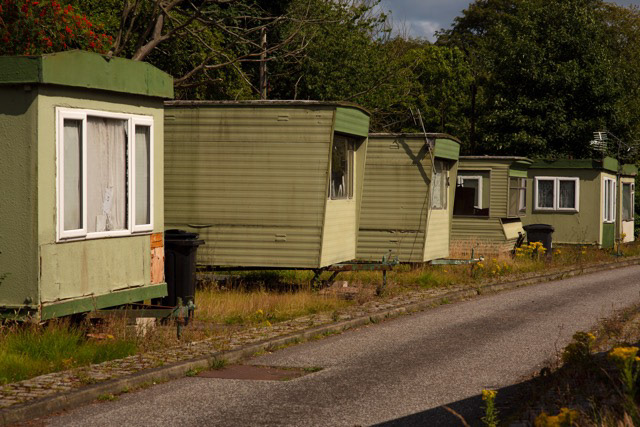
Persley Park caravan site
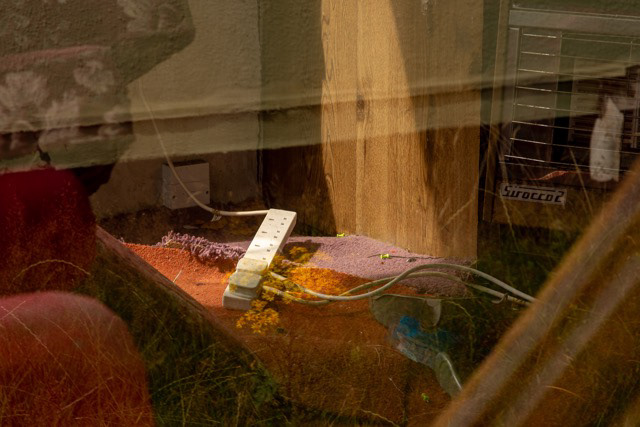
Wired up
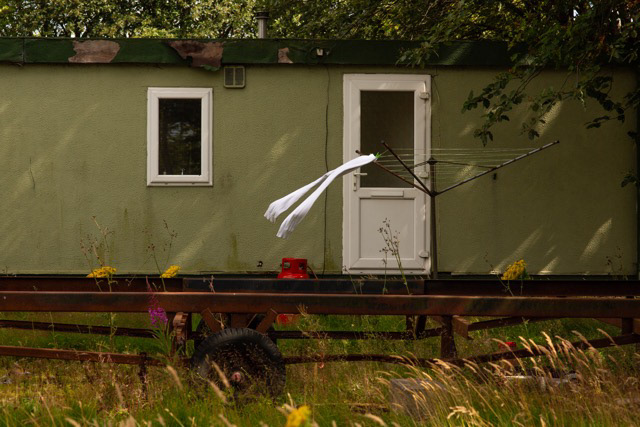
Longjohns
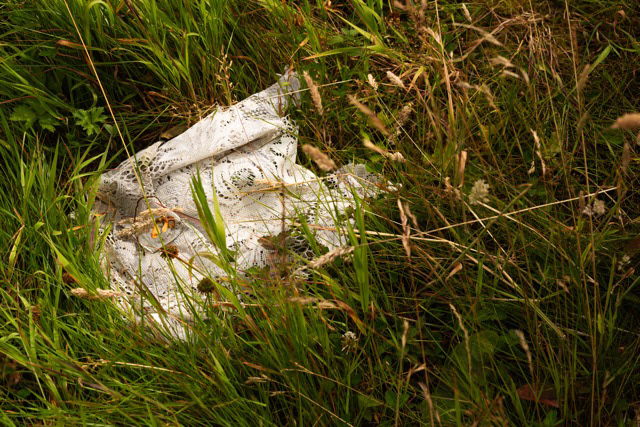
Ripped Linen curtain
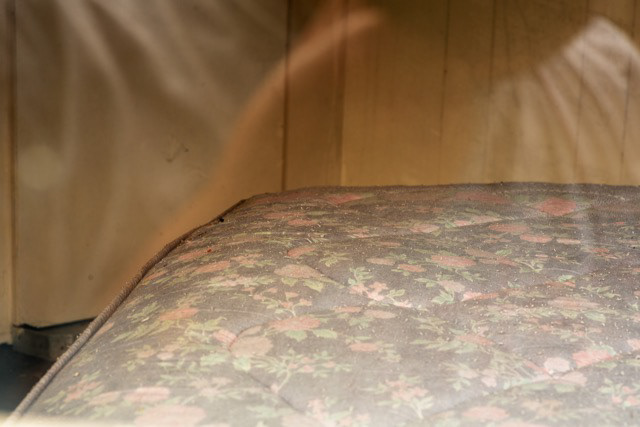
Bed
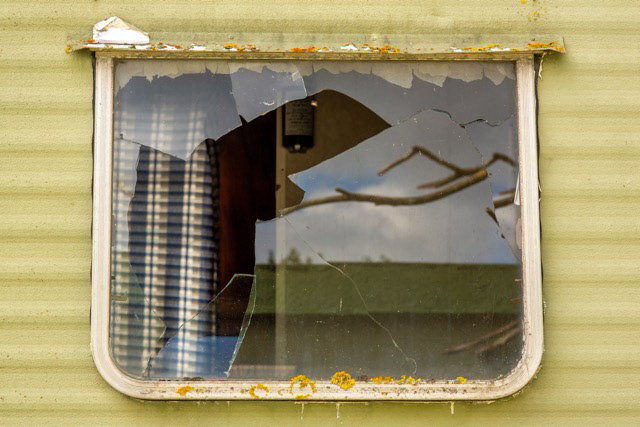
Broken
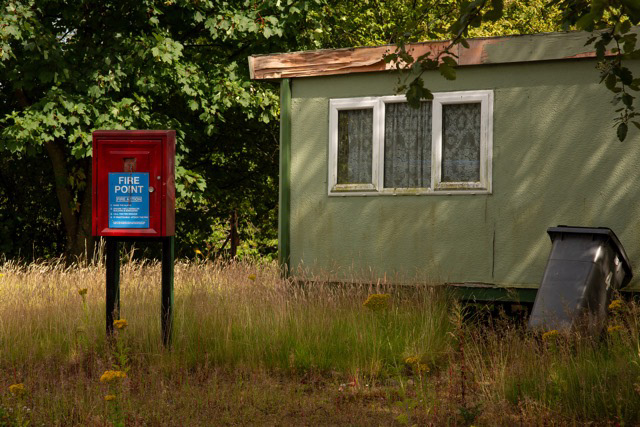
Fire Point
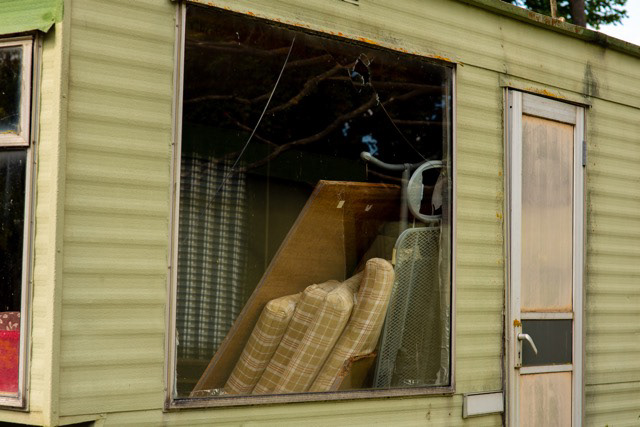
Stacked ironiard
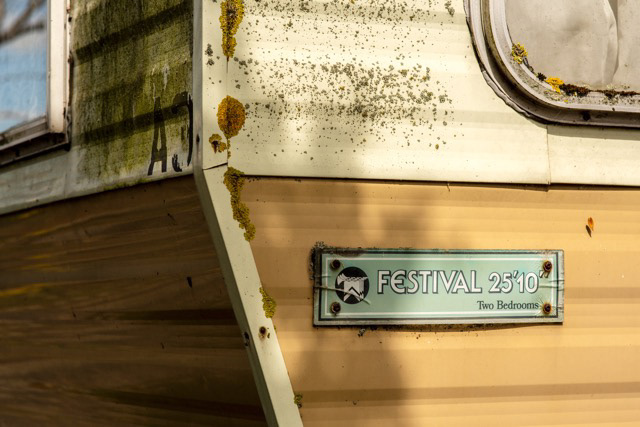
Two bedrooms
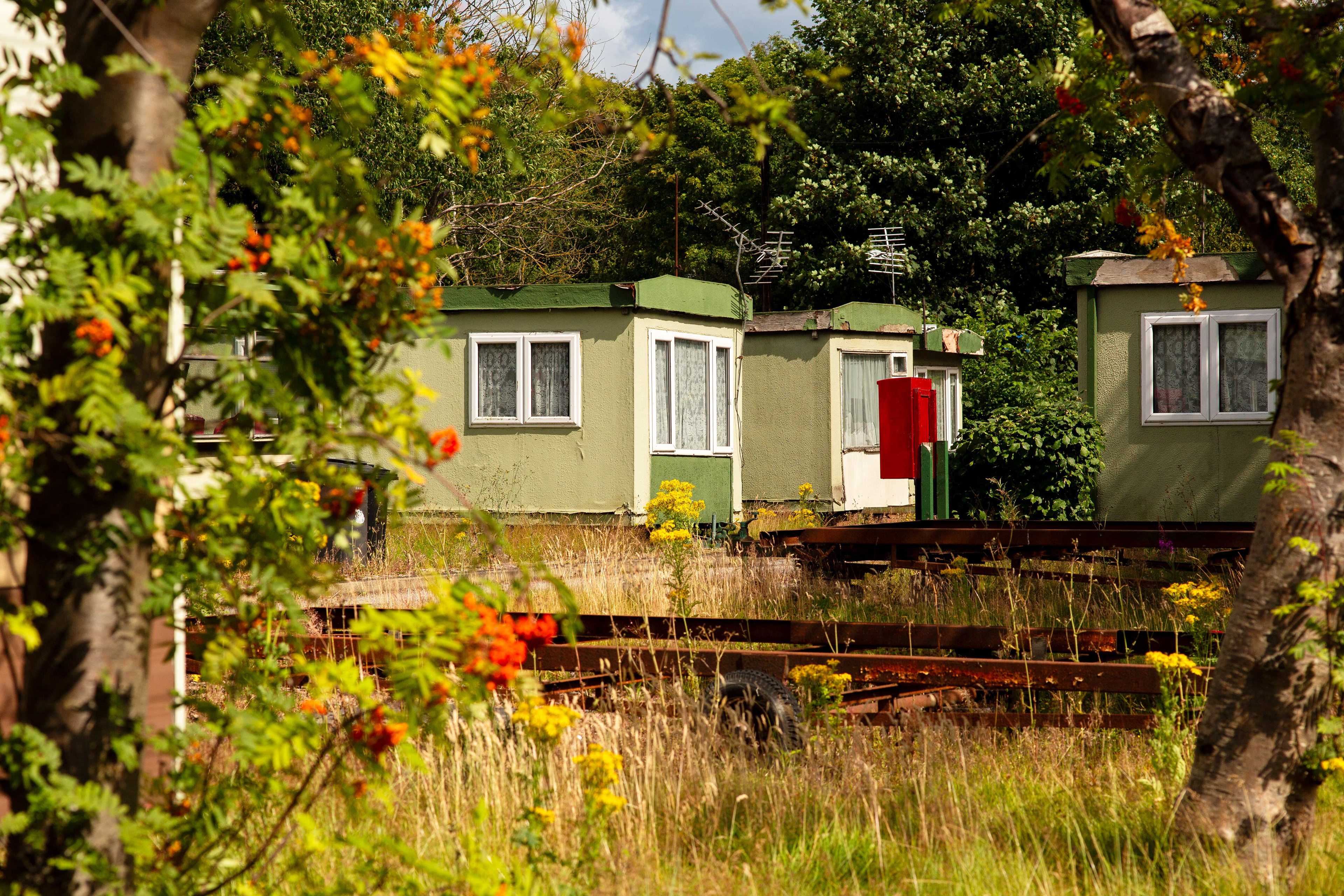
Reveal
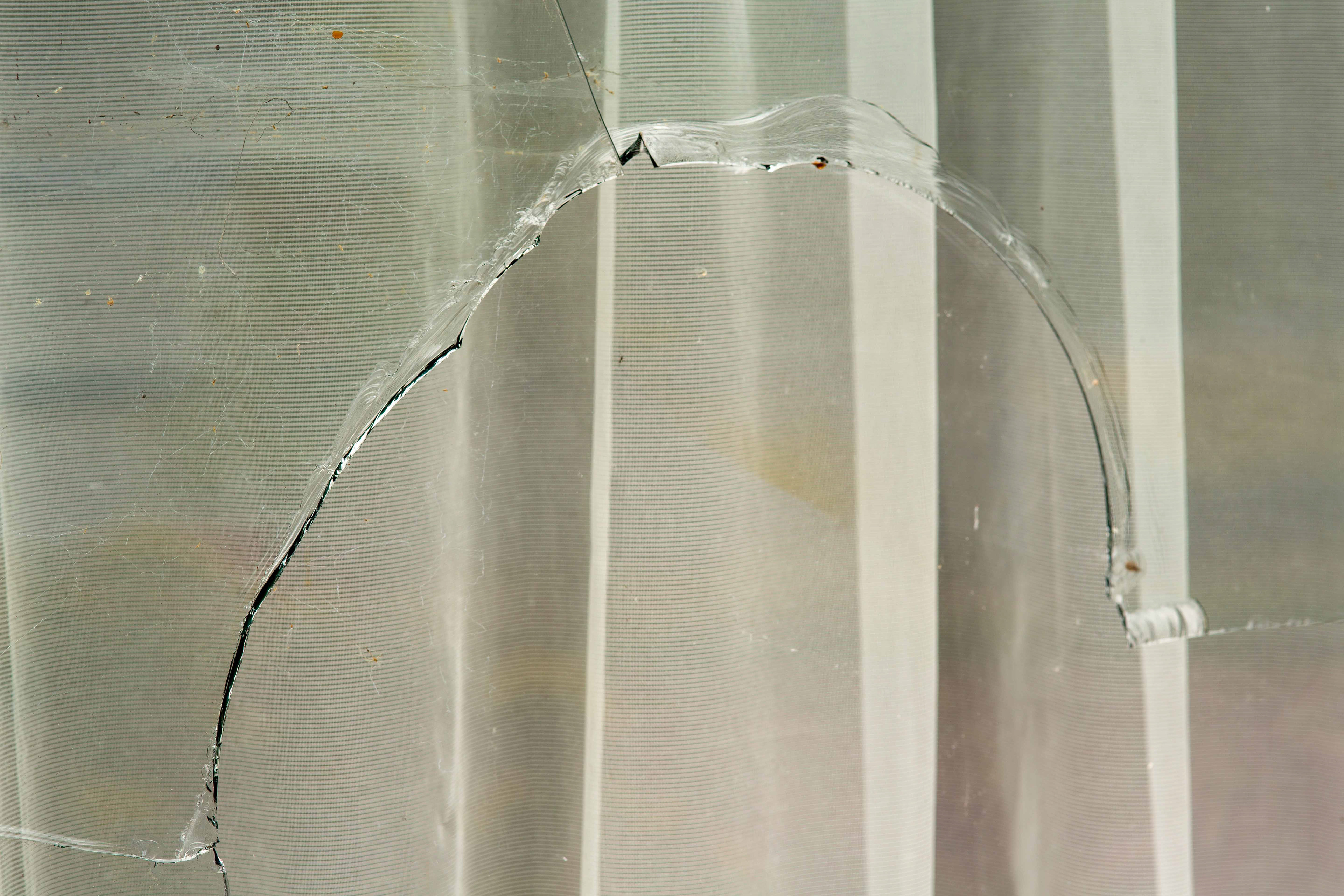
This project began during a personal period of transition. At fifty, after fifteen years in the oil industry, I experienced homelessness—an upheaval that arrived gradually, as stability quietly unraveled. My sister offered temporary shelter, and I began walking: first to cope, then to look more closely. Those walks became a method of inquiry, sharpening my awareness of how precarity sits in the landscape, often present, but kept just out of view.l
Site and Method
The work examines the abandoned Persley Park caravan site on Mugiemoss Road, Aberdeen. Once a temporary home for locals, travellers, and transient workers, it now sits largely vacant—caravans vandalised, windows blown out, diamanté curtains lifting in the wind, the whole place exposed and fragile.
Rather than photographing people, I focus on what remains: mattresses, appliances, folded ironing boards—small evidence of routine, care, and sudden interruption. These traces suggest lives lived here without revealing names or endings.
Sitting between documentary photography and social observation, the project uses absence to speak about housing insecurity, transience, and the overlooked edges of the city.
The Encounter and Reflection
On my next visit, I saw a pair of white long johns snapping in the wind, a quiet sign the site wasn’t empty! Then I noticed a woman half-hidden behind a caravan, bundled in a winter coat and hat. We didn’t speak. We just exchanged a small, respectful nod.
That brief moment shifted everything. The site stopped being a document of abandonment and became something else: a living, informal shelter — a place shaped by necessity, resilience, and staying out of sight.
Aims and relevance
The work draws attention to spaces beyond public view, complicating easy stories about homelessness and “dereliction.” By photographing indirect traces rather than exposing people directly, it avoids spectacle and keeps dignity at the centre.